SpaceX (Ticker: SPCX), which made its highly anticipated Nasdaq debut on June 12, 2026, is flashing major warning signs. After setting a record-breaking IPO and peaking at an all-time high of $225.64, the stock has shattered its $135 IPO floor, plunging straight into the $115 range.
Here is a data-driven breakdown of what is driving this brutal sell-off and the critical macro risks ahead for retail investors.
📉 Why is SPCX Crashing? The 3 Core Pillars of the Sell-off
The massive correction that wiped out SpaceX’s early gains—which briefly pushed its market cap past Amazon’s—boils down to three main catalysts:
- Starship Launch Scrubbed: A sudden mission abort due to engine ignition failure delivered a massive blow to near-term speculative sentiment.
- Aggressive CapEx & xAI Merger: Following Elon Musk’s merger with xAI, massive capital expenditure for building AI data centers (including the Texas Terafab) triggered a staggering $4.28 billion Q1 net loss, crushing immediate valuation metrics.
- Extreme 100x Sales Multiple: Trading at 96x to 100x its 2025 revenue, Wall Street quickly pushed back, pricing in heavy valuation adjustments far steeper than Nvidia or Tesla faced in their early post-IPO days.
💣 The Real Time-Bomb: August 6th $123B Lock-Up Expiration
The most severe near-term headwind suppressing SPCX shares is the impending wall of institutional supply set to flood the market.
- August 4th: The Inaugural Earnings Call: SpaceX will report its first-ever quarterly earnings post-IPO after the closing bell.
- August 6th: The $123B Supply Shock (The Ultimate Dump): Just 48 hours post-earnings, the insider lock-up period expires. Early backers and employees will be freed to liquidate 911.5 million shares—equivalent to a massive 44% of the entire float, valued between $116B and $123B.
Given this massive supply overhang, investors must brace for further downside risk leading into early August.
🛠️ Strategic Playbook: When Is It Safe to Enter?
While SpaceX’s long-term thesis remains undisputed—fueled by Starlink hitting 10 million subscribers and long-term Mars milestones—chasing the falling knife here is highly risky.
- Aggressive Strategy (DCA): For high-risk traders, accumulation via small dollar-cost averaging (DCA) starter positions can begin here, given the stock is trading at a 10%+ discount to its original $135 IPO price.
- Conservative Strategy (Wait for the Dust to Settle): The optimal entry point is to wait until the August 4th print confirms Starlink’s revenue trajectory, and the August 6th institutional lock-up volume is fully absorbed by the market. Look for a definitive support floor to form post-expiration before deploying heavy capital.
📊 Technical Chart Analysis
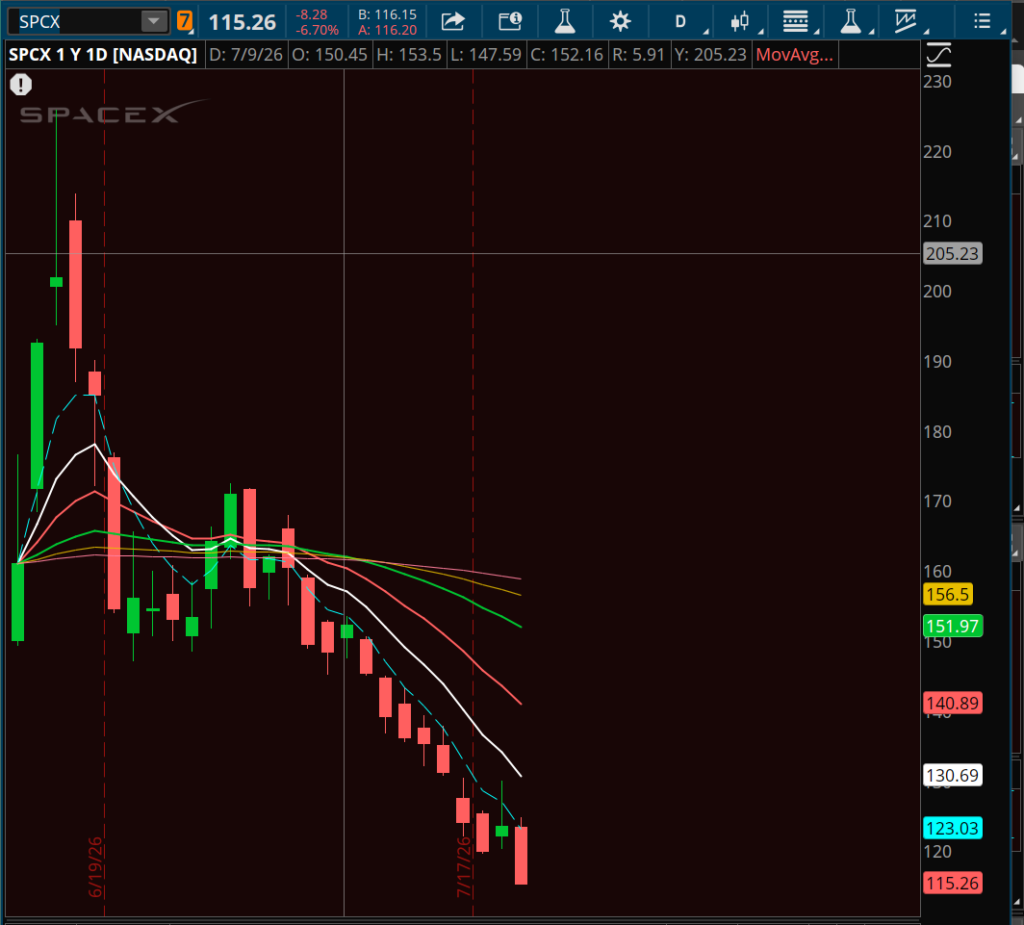
The daily chart continuously prints lower highs and lower lows, showing fierce bearish momentum. Patience is required until a structural trend reversal is confirmed.
※ This post is for informational purposes only, and you are solely responsible for your own investment decisions and risk management.
※ This post contains affiliate links, and we may receive a commission at no additional cost to you.
※ Prop Firm Discount Information
※ TradeDay Max 55% Off https://www.tradeday.com/?a_aid=NS (If the discount isn’t applied automatically, please type the promo code NS in capital letters at checkout!)